

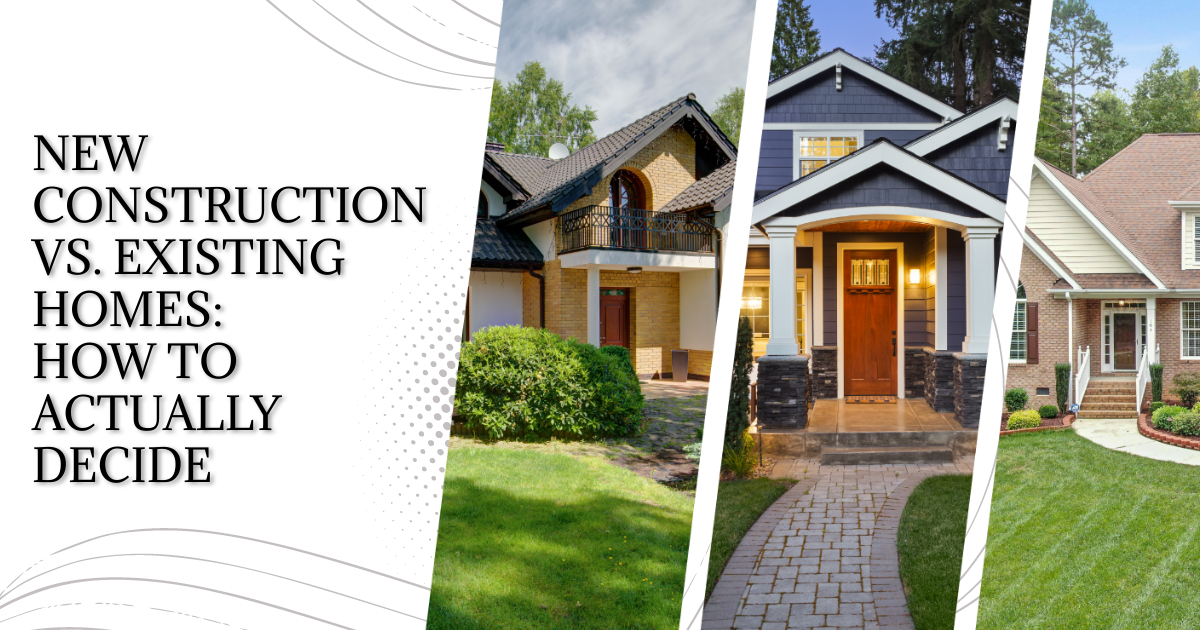
You've spent weeks touring homes. Some were close to your dream home, but nothing stood out. Then you drove past a new development with a model home open on a Saturday afternoon, walked through a freshly built house with quartz countertops and a three-car garage, and thought: why am I not looking at these?
Or maybe you went the other direction. You got excited about a new build, put down a deposit, and now you're six months in, waiting on a completion date that keeps changing.
Both situations are common, and both point to the same problem: most buyers choose between new construction and existing homes based on gut feeling rather than a clear-eyed look at what each path actually involves. In some markets, new construction makes up a significant share of available inventory, which means this decision isn't always purely about preference.
Pros and Cons of New Construction Homes
Everything in the house is new, from the appliances to the roof to the HVAC system, which means near-term maintenance costs are typically lower than what you'd face with an older home. Modern floor plans tend to reflect how people actually live: open kitchens, primary suites with lots of closet space, a dedicated room for a home office or home gym. New builds also tend to outperform older homes on energy efficiency, with updated insulation, windows, and mechanical systems that are expensive to retrofit into existing construction.
Another pro: If you're buying in a pre-construction phase, there's often a customization window where you can choose finishes, cabinetry, flooring, and certain layout options.
But the cons? The model home that made you fall in love with new construction was staged with every upgrade the builder offers. The base price you're quoted is typically not the price you'll pay once you've selected finishes that look anything like what you toured. Before you're emotionally committed to a specific community, get a realistic all-in estimate that accounts for every selection you'd actually make.
New communities also take time to feel like neighborhoods. Mature trees, established landscaping, and nearby businesses all come with years. Property taxes in new developments are sometimes reassessed after the first year once the community is fully built out, which can affect your monthly payment if taxes are escrowed. HOA rules are worth reading carefully as well. Some restrict exterior paint choices, landscaping decisions, and rental policies in ways that older neighborhoods don't.
What New Construction Buyers Often Don't Expect
Builder contracts are long, detailed documents written by lawyers who work for the builder. They routinely include provisions that limit your recourse if timelines change, if materials are substituted, or if the finished product doesn't match what was represented in the model or the renderings. Builder contracts are written to protect the builder, and having someone review them before you sign protects you.
Completion dates in builder contracts are typically estimates, not guarantees. A nine-month build can become fourteen months, and if you've already sold your current home or given notice on a rental, that gap creates real financial and logistical pressure. Financing compounds this. Many lenders offer rate locks for new construction, but those locks have expiration dates. If your build runs long and your rate lock expires, you may need to extend it at a cost or relock at whatever rate is current at that point. Ask your lender directly how they handle rate lock extensions before you sign a builder contract.
Upgrade costs are another common surprise. Kitchens, flooring, lighting packages, and fixture selections can add up fast, and the gap between the base price and what the finished home actually costs moves quickly. Lot premiums, which are additional charges builders apply to more desirable lots within a community such as corner lots, cul-de-sacs, or lots backing to open space, are added on top of the base price and aren't always prominently disclosed upfront.
Do I Need An Inspection For a New Construction Home?
Just because a home is new doesn’t mean you should skip an independent inspection. You can choose to do two: one before drywall goes up, when the framing, plumbing, and electrical are fully visible, and one at final walkthrough.
Even quality new builds typically have a punch list at closing, a record of minor items the builder agrees to address after move-in, things like a sticking door, a paint touch-up, or a fixture adjustment. That's a normal part of the process, but it's worth understanding what the follow-up procedure looks like before you close.
Pros and Cons of Existing Homes
Resale or existing homes come with something new construction can't manufacture: context. You can see how the neighborhood feels on a Tuesday afternoon. You can walk to the coffee shop. The trees are tall and the sidewalks have been there for decades. For buyers who place real value on location and neighborhood character, an established area often delivers something no new development can match for years.
Older homes also frequently carry architectural details that are expensive or difficult to replicate: original hardwood floors, plaster ceilings, millwork, and built-ins that give a house genuine character.
The transaction process is faster. Resale deals often close in a matter of weeks, and there's no guesswork about what the finished home looks or feels. Individual sellers also have more flexibility on terms than corporate builders typically offer. That flexibility is concrete: price reductions, closing cost contributions, repair credits after inspection, and possession date adjustments are all on the table in a resale negotiation. Builders rarely move on any of those.
What Existing Home Buyers Often Don't Expect
Existing homes come with existing wear. Older HVAC systems, aging roofs, dated plumbing, and electrical panels that don't meet current standards are common in homes that haven't been significantly updated. A thorough inspection is essential, and buyers should go in with a realistic sense of what deferred maintenance might cost in the first few years.
Renovation costs add up quickly as well. Making an older kitchen or bathroom feel current is rarely cheap, and the gap between what a home looks like now and what you'd want it to look like is worth pricing out before you make an offer. Older homes can also carry higher insurance costs, particularly if the roof, electrical, or plumbing systems are aging, so getting an insurance quote during the due diligence period is worth building into your process.
In competitive spring markets, well-priced existing homes move fast. Being financially prepared and clear on your priorities before you find the right one matters more than most buyers expect going in.
Frequently Asked Questions
How much does a predictable closing date matter to your situation? If you're on a firm schedule, resale gives you significantly more certainty than a new build.
Do you want to choose your own finishes, or would you rather walk into something finished and ready? New construction offers that customization window, but it costs money, requires patience, and doesn't always deliver what the model suggested it would.
How do you feel about being in a community that's still developing? Some buyers love being among the first in a new neighborhood. Others want the feeling of a place that already has a pulse.
What's your honest tolerance for uncertainty? Construction delays, upgrade cost overruns, contract language that favors the builder, and a punch list at closing are all normal parts of the new build process, and they're worth factoring in before you commit.
Have you calculated the real all-in number? Base price plus upgrades plus lot premiums plus potential carrying costs or rate lock fees during construction is the figure that actually matters, not the price on the sign out front.
Where Your Agent Makes the Difference
If you’re considering new construction, the builder often pays a cooperating commission to the buyer’s agent, but it varies by builder and it should be confirmed up front. Many builders also require your agent to be present or registered on your first visit to the sales office. If you tour solo and later ask to add representation, the builder may not recognize your agent. It’s a small procedural step that can affect whether you have someone reviewing the contract and negotiating items like upgrades on your behalf.
For resale, a good local agent knows which homes are realistically priced, which neighborhoods are gaining traction, and where deferred maintenance tends to hide in a showing. Rules around disclosure, inspections, and negotiation vary significantly by location, so who you work with matters.